How to Optimize for ChatGPT Search: Complete 2026 Guide
Discover the ranking factors, content structures, and technical signals required to get your brand cited and recommended in ChatGPT Search results.
How do you optimize a website for ChatGPT Search?
How Does ChatGPT Search Work Under the Hood?
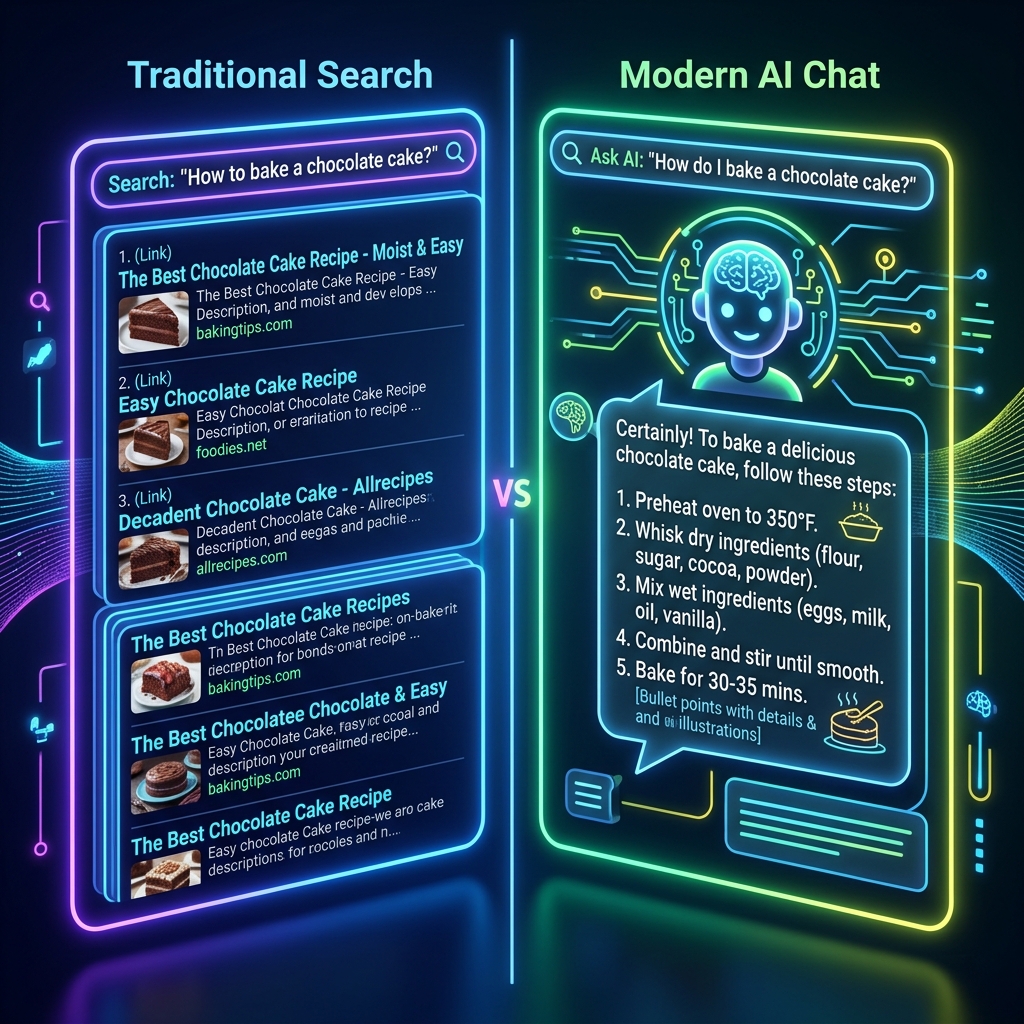
With the rollout of ChatGPT Search, OpenAI transitioned ChatGPT from a static closed-weights model into an active, real-time answer engine. Unlike Google, which sorts millions of URLs on a Search Engine Results Page (SERP), ChatGPT operates a real-time Retrieval-Augmented Generation (RAG) synthesis pipeline.
When a user asks a question or submits a commercial search prompt:
- Query Intent Classification: ChatGPT analyzes whether the prompt requires live web browsing.
- Index Retrieval: ChatGPT issues background search queries primarily using Bing's search index and OpenAI's proprietary web index via
OAI-SearchBot. - Passage Extraction & Vector Reranking: The top retrieved web pages are ingested into memory, stripped of boilerplate HTML, and scored for semantic relevance.
- Answer Generation & Inline Attribution: ChatGPT synthesizes a unified answer with inline citation buttons and interactive source cards.
According to independent AI citation benchmarks, over 82% of ChatGPT Search citations originate from the top 30% of web page content (Source: Cited First Co. AI Search Index, 2026). If your answer is buried beneath promotional intros, the model will extract a competitor's content instead.
The 5 Core ChatGPT Search Ranking Signals
To earn persistent citations and vendor recommendations in ChatGPT, your digital presence must align with five algorithmic pillars:
1. Content-Answer Fit & BLUF Architecture (+40% Extraction Boost)
ChatGPT is engineered to deliver concise, natural-language answers. Pages formatted with the BLUF (Bottom Line Up Front) pattern—where the definitive 40–60 word answer immediately follows an H2/H3 question header—are 4x more likely to be extracted into ChatGPT's generation context than long narrative text.
2. Bing Index Health & Webmaster Grounding
Because ChatGPT relies heavily on Microsoft Bing's web index for live search, ensuring your site is fully crawled and indexed in Bing Webmaster Tools is mandatory. Sites with crawl errors or missing XML sitemaps in Bing are invisible to ChatGPT Search.
3. Machine-Readable Agent Context (llms.txt & /pricing.md)
OpenAI's crawlers natively parse standardized markdown documentation. Hosting a clean llms.txt and /pricing.md at your domain root allows ChatGPT to extract accurate pricing tiers, product capabilities, and technical specs without JavaScript parsing errors.
4. Third-Party Entity Consensus & Review Signals
ChatGPT validates company claims by triangulating across multiple authoritative hubs. A brand with consistent 4.5+ star reviews across G2, Capterra, Trustpilot, and authentic community discussions on Reddit carries significantly higher authority weights during prompt synthesis.
5. AI Crawler Permissions in robots.txt
Ensure your server permits OpenAI's crawling agents:
OAI-SearchBot(used specifically for ChatGPT Search live retrieval)GPTBot(used for AI data training and offline retrieval)ChatGPT-User(used when an active user requests a direct URL browse)
ChatGPT Search vs. Perplexity vs. Google AI Overviews
| Search Dimension | ChatGPT Search | Perplexity AI | Google AI Overviews |
|---|---|---|---|
| Primary Index | Bing Index + OpenAI Crawler | Real-Time Multi-Source Web Index | Core Google Organic Search Index |
| Citation Style | Inline side-panel source cards | Numerical superscript footnotes | Top carousel cards above organic SERP |
| Content Preference | Structured BLUF passages & tables | Dense, statistical answer nuggets | High E-E-A-T comprehensive clusters |
| Review Weighting | High (G2, Capterra, Reddit, Trustpilot) | Very High (Forums, Reddit, News) | Moderate (Google Reviews, Schema) |
| Primary Crawler | OAI-SearchBot |
PerplexityBot |
Google-Extended / Googlebot |
4-Step Checklist to Earn ChatGPT Citations Today
[ ] 1. Bing Webmaster Verification: Verify domain ownership in Bing Webmaster Tools and submit clean XML sitemaps.
[ ] 2. BLUF Heading Restructuring: Place 40-60 word Answer Blocks directly beneath every question-based H2 heading.
[ ] 3. Schema & Agent Files: Deploy complete JSON-LD Organization/Service schema and publish root /llms.txt and /pricing.md files.
[ ] 4. Review Platform Optimization: Claim and update company profiles across G2, Capterra, and Trustpilot with verified customer feedback.
Want to know if ChatGPT is recommending your brand?
Test your site's current AI visibility across ChatGPT, Perplexity, and Gemini using our free diagnostic engine.
Run Your Free AI Visibility Audit
Discover if ChatGPT Search is currently recommending your business or sending high-intent buyers to your competitors.
Check Your AI Citations Free →